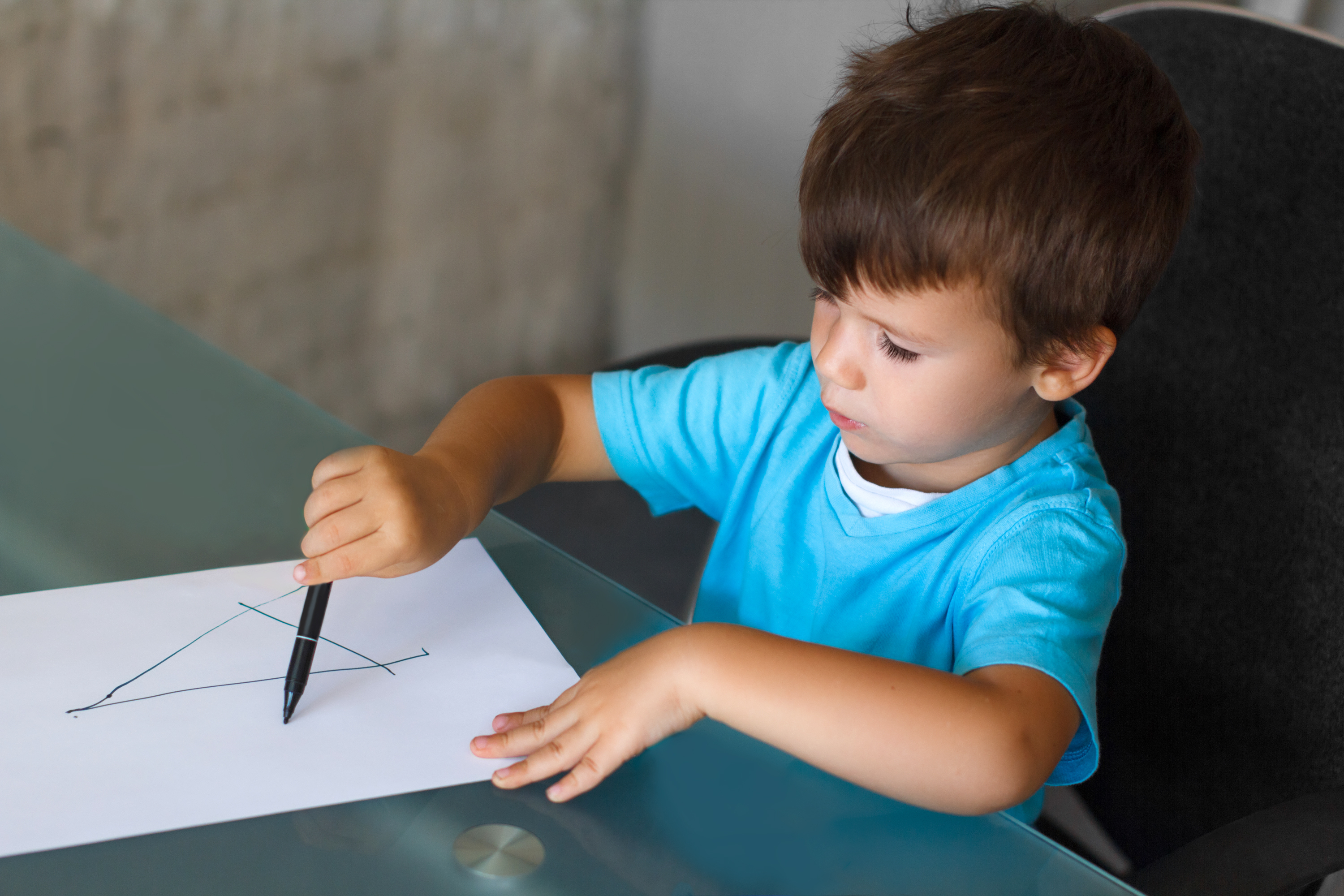
Handwriting is often misunderstood because parents confuse it with writing. While learning to write is, of course, linked to handwriting, the formation of letters and marks requires several physical skills, including hand-eye co-ordination.
There are many processes involved for children to produce fluid joined up handwriting, some of which are developmental. When adults try to shortcut any of the processes – by, for example, encouraging children to trace earlier than they are ready or to write on lines – fluent, even handwriting in the primary years is rarely achieved.
Having said this, there are some activities that are beneficial to children’s handwriting, which we will share, while explaining their importance.
PENCIL GRIP
One of the consequences of children doing inappropriate handwriting activities is the development of an inefficient pencil grip. It is always interesting to watch four-year-olds who have developed a poor pencil grip because they often use static grasps that prevent the pencil from moving. This may give them early control, but the danger is that these grasps do not allow sufficient movement to enable the joins and flicks needed for cursive or joined handwriting.
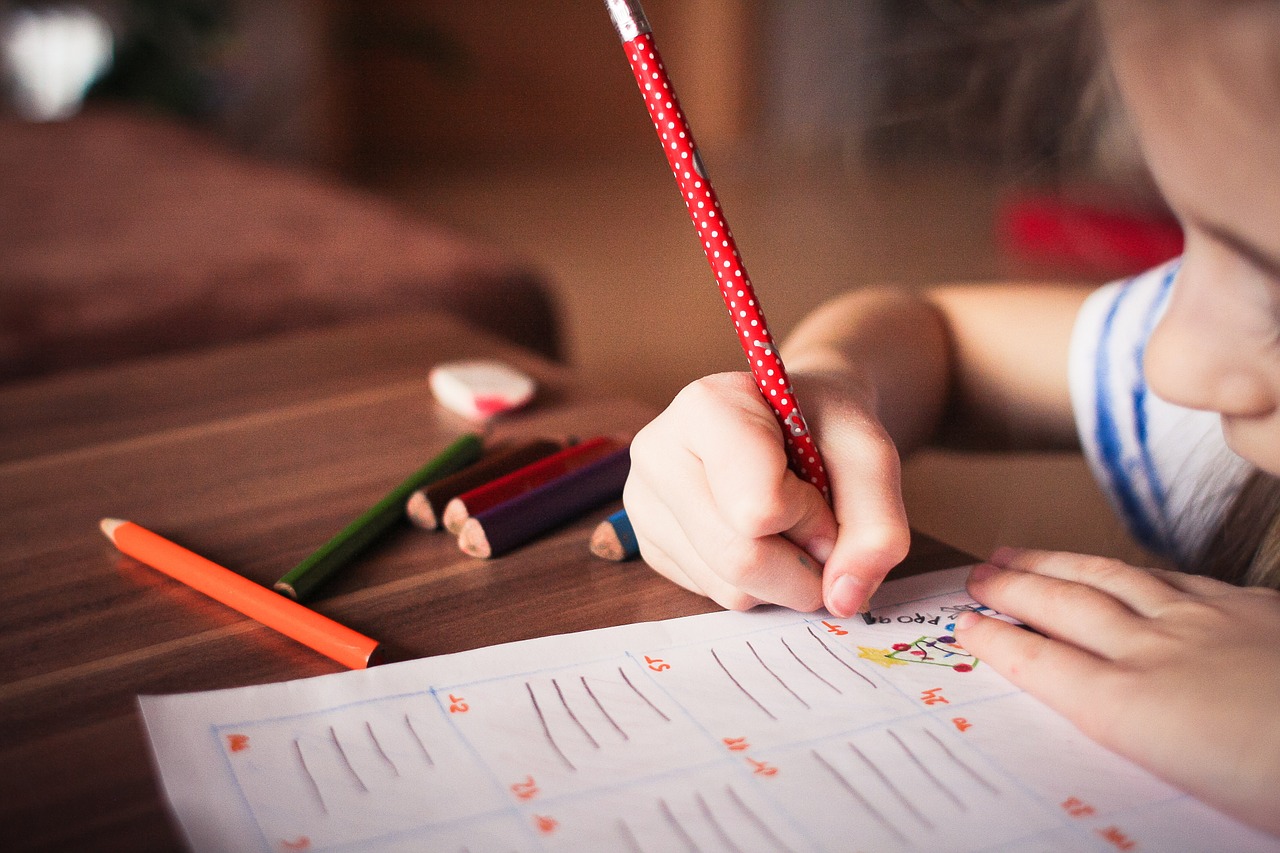
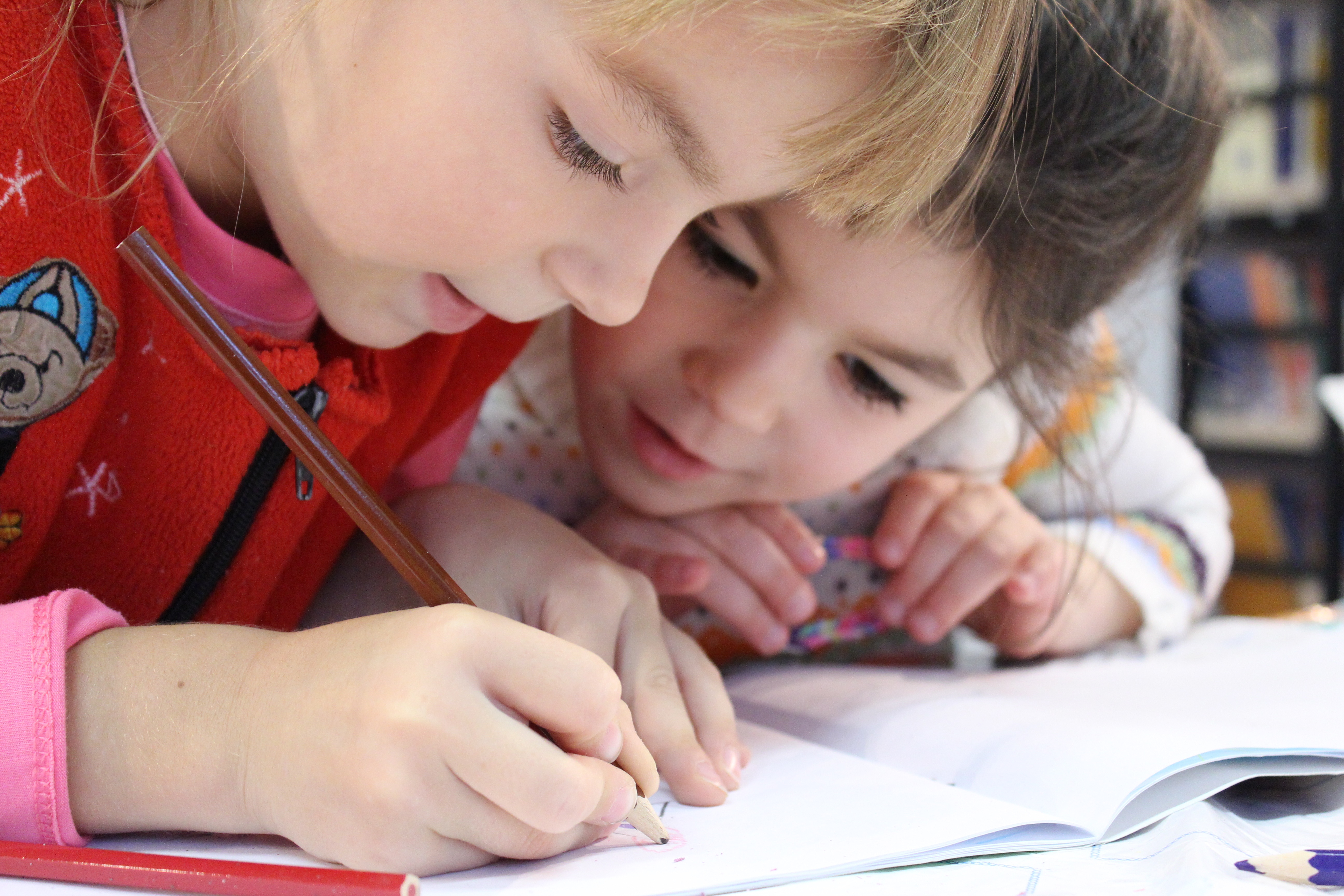
The best type of grip for handwriting is considered to be the dynamic tripod grip, where the pencil is held between flexed thumb and index finger while resting on the middle finger. For children to develop this grasp, they need plenty of activities that involve the pincer grasp. This can include games such as picking up objects such as chickpeas with tweezers or sorting sequins from confetti. For parents who may be keen to get their child writing, it is important that we share with them a range of activities that will support correct pencil grasp and also explain to them the dangers of early tracing.
CHANGING GRASPS
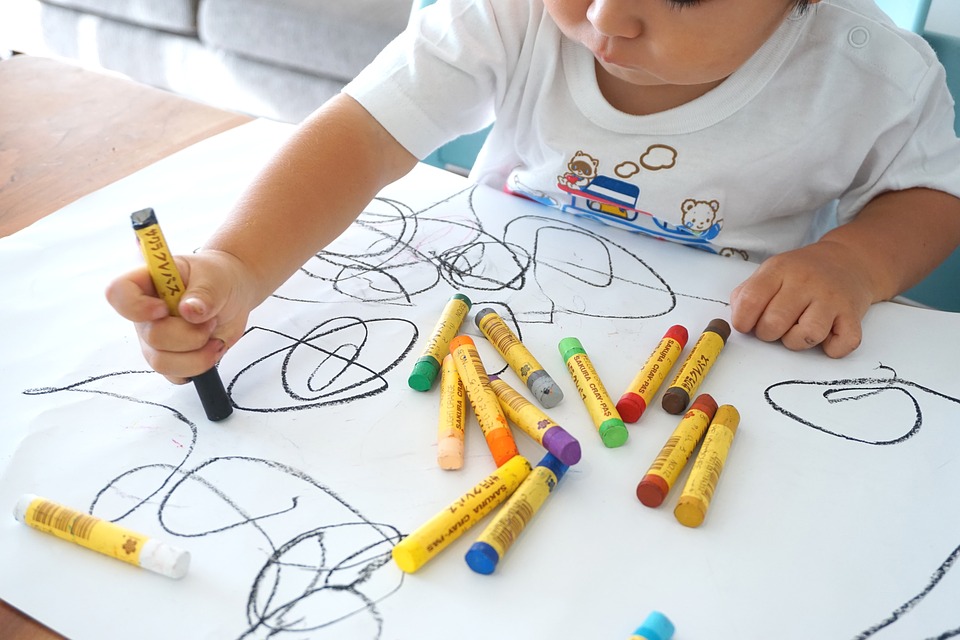
As well as strengthening the pincer grip, we need to help parents understand that grasps change as children develop. This means that a young toddler using a whole hand or palmar grasp to clutch a marker should not be corrected, as this is age appropriate. Ideally, with the younger age, it is useful to suggest and look out for mark-making tools that allow the hand to be in more of a ball shape, so as to allow the child to make easy fluid movements.
LEARNING THE MOVEMENTS
It is useful for parents to know about the three basic movements that will provide children with the building blocks of letter formation. These are thought to be anti-clockwise rotational marks that begin at the top, vertical marks that also begin at the top and, finally, bouncing movements. It is useful if parents are shown how to produce these and how they link to letter formation. Ideally, these should be in place before children are encouraged to write their name. As many parents associate handwriting with pens and pencils, it is also useful to show how activities that support these movements can be done without a pen or paper in sight.
SIZE MATTERS
For some reason, many parents whose children have begun to write their name seem to feel that small handwriting is neater. It is worth helping these parents to recognise that there is a huge amount of precision needed to form letters correctly. Starting out with large movements actually allows children to gain control more quickly. It is fairly easy to illustrate this to parents by simply asking them to put a pen in their nonwriting hand and then asking them first to write something as small as they can and then to do the same but writing on a much larger scale.
Finally, it is important to identify and support left-handed children. They are likely to need to make larger movements for longer and will benefit from writing on a sloped surface.
RHYME TIME
From three to 12 months
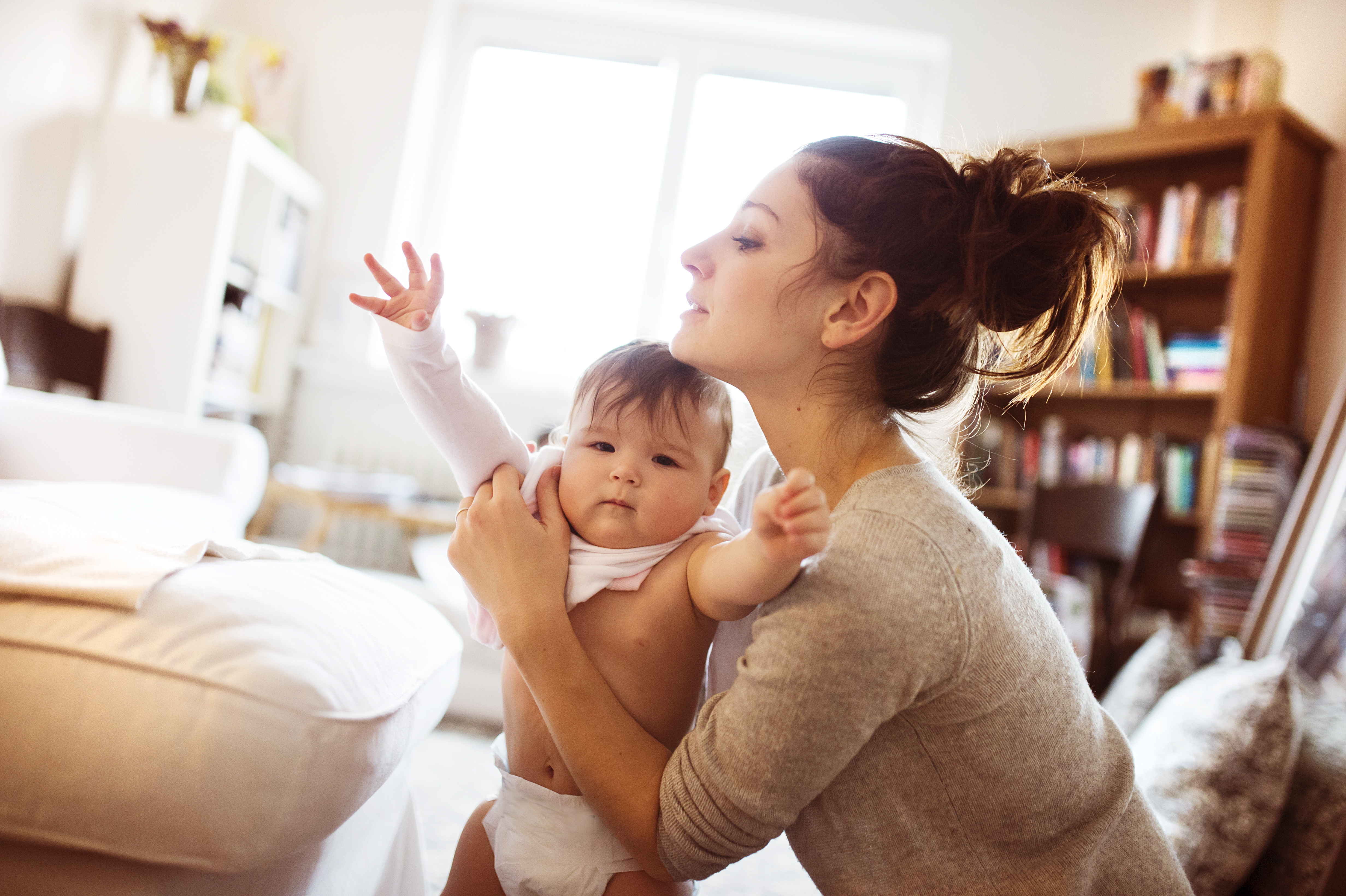
While no one thinks that you can teach a baby handwriting, we can help babies to sense the circular or bouncing movements that form the basis of letters such as o, a and m. Look out for the traditional rhyme Round and Round the Garden Like a Teddy Bear, as it is great for helping your baby to ‘feel’ the circular movements.
You could also try out other rhymes such as Row, Row, Row the Boat, which involves your baby being bounced gently. This helps them to sense the bouncing movements that are needed to form letters such as h and m.
How this activity helps your child
Language:
Rhymes are great at helping babies to tune into the sounds of words and encouraging them to babble.
Physical development:
Rhymes motivate babies to imitate the movements.
Social skills:
Rhymes and similar games help babies to learn to enjoy being in the company of others and to exchange eye contact.
What next?
Look out for other rhymes and activities that involve movement.
SQUEAKY TOYS
From 12 months to two years
Look out for squeaky toys; these are great for strengthening hands. They also help children to develop one of the early grips that children use to paint and make marks. This grasp, where the whole hand is clasped around a writing implement, is known as a palmar grasp. You might need to model the movement so your child can see what they need to do.
How this activity helps your child
Early science:
Children learn about cause and effect as they learn that their movements create sounds.
Confidence:
Children gain in confidence as they learn that they can control an object.
Language:
Some toys that make noises can stimulate children to talk.
What next?
Look out for safe soft toys that can be squeezed.
SNACK TIME
From two to three years
Most children will need a small healthy snack between meals. Try putting a few dried raisins or some plain popcorn in a bowl and watch how the child uses their thumb and index finger to pick them out. This movement is known as a pincer grasp and is the same movement that forms the basis for holding a pencil effectively.
You could also chop up squares of bread or pieces of tomato as a variation. You might like to mix up some snacks in a bowl; this requires children to be more precise as they pick out and choose their favourite bits and pieces first. You could also count with your child as each item is gobbled up.
How this activity helps your child
Mathematics:
When two foods are mixed together, your child will learn to sort them as they eat them.
Language:
Snack time is a good opportunity for you to chat to your child.
Independence:
Being able to choose which food to eat helps your child to become independent.
What next?
Encourage your child to peel bananas and oranges.
SOAPY MOVEMENTS
From two-and-a-half to four years
Washing cars, shower doors or windows can be used to model and encourage some specific handwriting movements. With soapy water and a sponge, make some circular motions. Begin at the top and go around anti-clockwise, as this is the direction that letters such as a, o and d start with.
Don’t worry if your child does not copy exactly or just wants to play with the soapy water after a while. Once your child can make the circular movement, see if you can model bouncing or zigzag type movements. These require more skill, so don’t worry if your child finds these difficult or is not interested – at least your windows will be clean.
How this activity helps your child
Creativity:
Making marks with soapy water helps your child express themselves.
Mathematics:
This activity can help your child learn words linked to size and shape, such as ‘ round’ or ‘big’.
Physical development:
Making large marks helps develop the muscles in your child’s arm and also supports their posture.
What next?
Try this activity using an old paintbrush.
STICKY FINGERS
From three to five years
Children love playing with glue and sticking bits on paper. This activity can develop several hand movements to support handwriting. Look out for some items that will be fun for your child to sort and stick. Sequins, confetti and small pieces of ribbon work well because children love shiny things.
You can mix up the bits and pieces that are to be stuck in a plastic container. This way, your child will have to use a pincer grip to pick out the items that attract them.
Put out some glue sticks and some sheets of paper. You might also like to sit down and enjoy the activity yourself, although do make sure you let your child explore for themselves. Don’t worry either if your child spends longer handling the confetti and sequins than sticking them down as this is pretty normal when children try this for the first time.
How this activity helps your child
Creativity:
Collage activities can help your child to be creative as they learn to use different materials to create patterns.
Mathematics:
Items of different colours, textures and shapes encourage children to practise their sorting and matching skills.
Language:
This type of activity can help children learn new words that describe what they are doing and the items that they are using.
What next?
Put out additional materials including felt tips, stickers and scissors.

FRIDGE PENPALS
From three-and-a-half to five years
From about three-and-ahalf years old, children love to pretend that they are writing, and from about four years they often start to include letter shapes and even some simple words. Having fun while making writing movements or practising writing is important.
Try writing a very short letter then putting it under a fridge magnet where your child will find it. Suggest that your child writes back. Leave out some paper, markers and stickers and leave your child to it. If your child does write back, wait until they are not around before putting out another letter. Don’t worry if your child only makes a few marks or is not writing very much. Writing takes time, and with confidence and skill they will be able to write more.
How this activity helps your child
Imagination:
This activity can help children’s imagination as they think about who might be the Fridge Penpal.
Writing:
By finding a fun way to communicate using marks, your child will be learning about writing.
Emotion:
This activity can help your child feel special and this can be good for his or her confidence.
What next?
Try writing letters that are similar so that your child starts to be able to recognise some simple words.
This article was written by Penny Tassoni and provided by nurseryworld.co.uk